3.1 Control Plane vs Agent Execution Plane
3.2 Project Scope Model
3.3 Data Flow: Source -> Release -> Pipeline -> Logs/Artifacts
3.4 Runtime Configuration Layers (global / project / environment)
3.5 Pipeline Execution Semantics
3.6 Release Governance Path
3.7 Rollback Architecture (Policy-driven)
3.8 Security and Trust Boundaries
3.9 State and Persistence Model
3.10 Scalability Model
3.11 Failure Modes and Recovery Patterns
3.12 Why This Architecture Works in Practice
2.5 Create First Blueprint
Orbnetes deployment and release orchestration documentation for operators and platform teams.
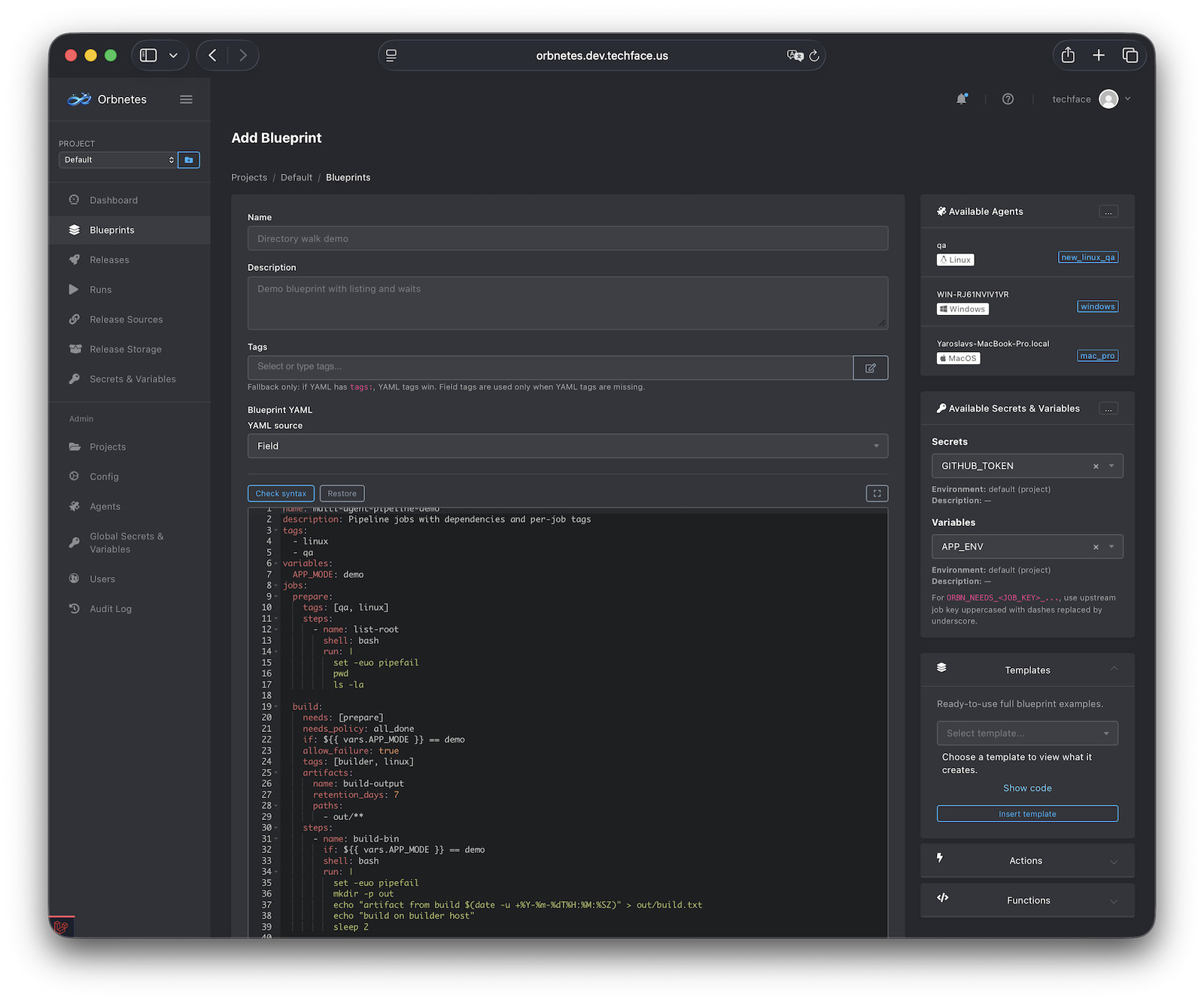
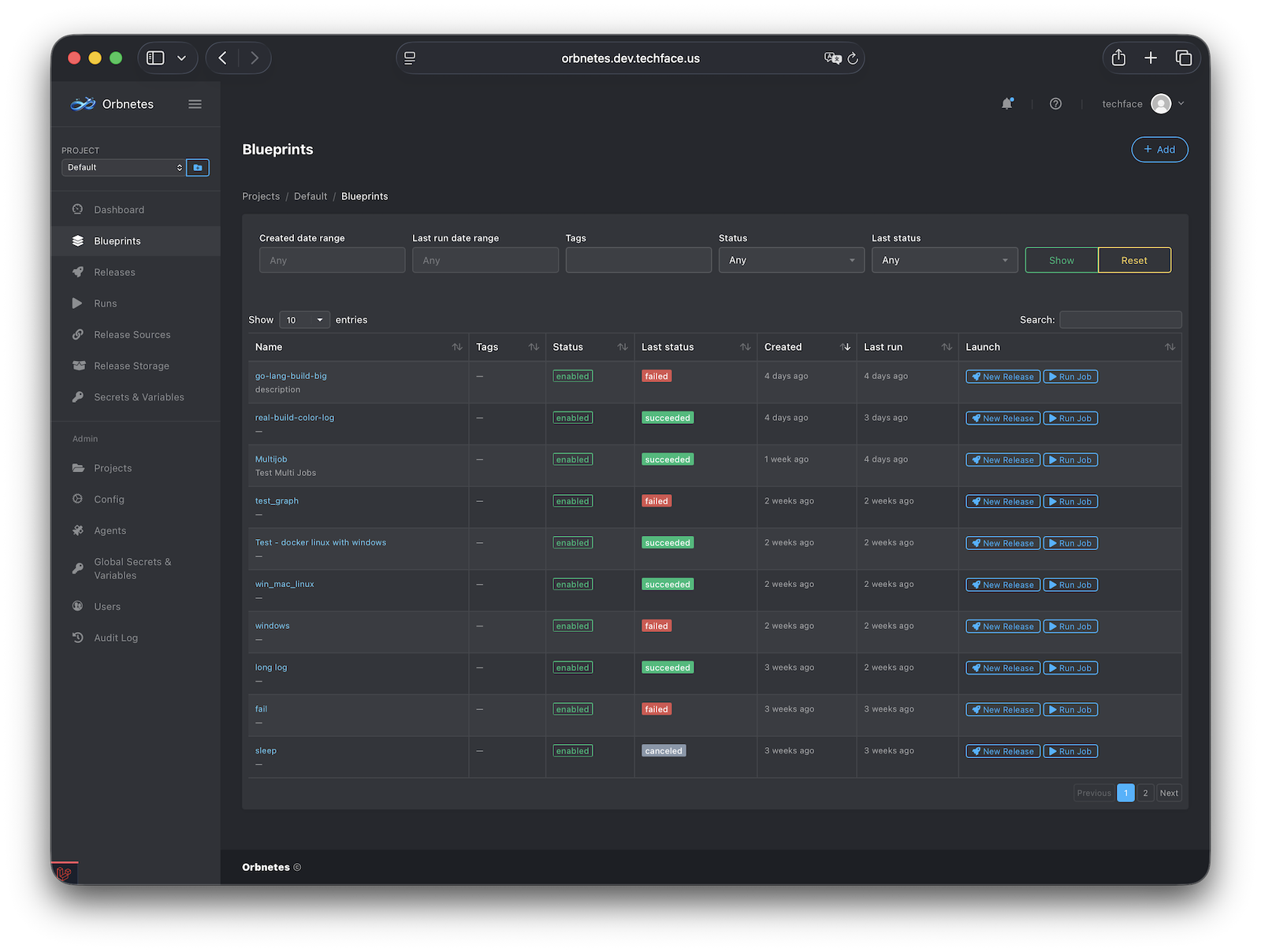
Your first blueprint should be intentionally simple and observable.
Recommended first blueprint shape:
- Job 1:
backup(echo/validation command). - Job 2:
deploydepends on backup. - Shared tag that matches your online agent.
- Optional one launch input (for environment label).
Steps:
- Open Blueprints -> Create.
- Add minimal YAML.
- Use syntax check.
- Save blueprint.
Best practice for first blueprint:
- Avoid complex conditions and artifacts initially.
- Add complexity only after first successful end-to-end run.
Validation:
- Blueprint appears in list with expected launch mode.
- Run button is enabled for your intended flow.
- YAML validates without errors.