3.1 Control Plane vs Agent Execution Plane
3.2 Project Scope Model
3.3 Data Flow: Source -> Release -> Pipeline -> Logs/Artifacts
3.4 Runtime Configuration Layers (global / project / environment)
3.5 Pipeline Execution Semantics
3.6 Release Governance Path
3.7 Rollback Architecture (Policy-driven)
3.8 Security and Trust Boundaries
3.9 State and Persistence Model
3.10 Scalability Model
3.11 Failure Modes and Recovery Patterns
3.12 Why This Architecture Works in Practice
11.4 Live Job Pages
Orbnetes deployment and release orchestration documentation for operators and platform teams.
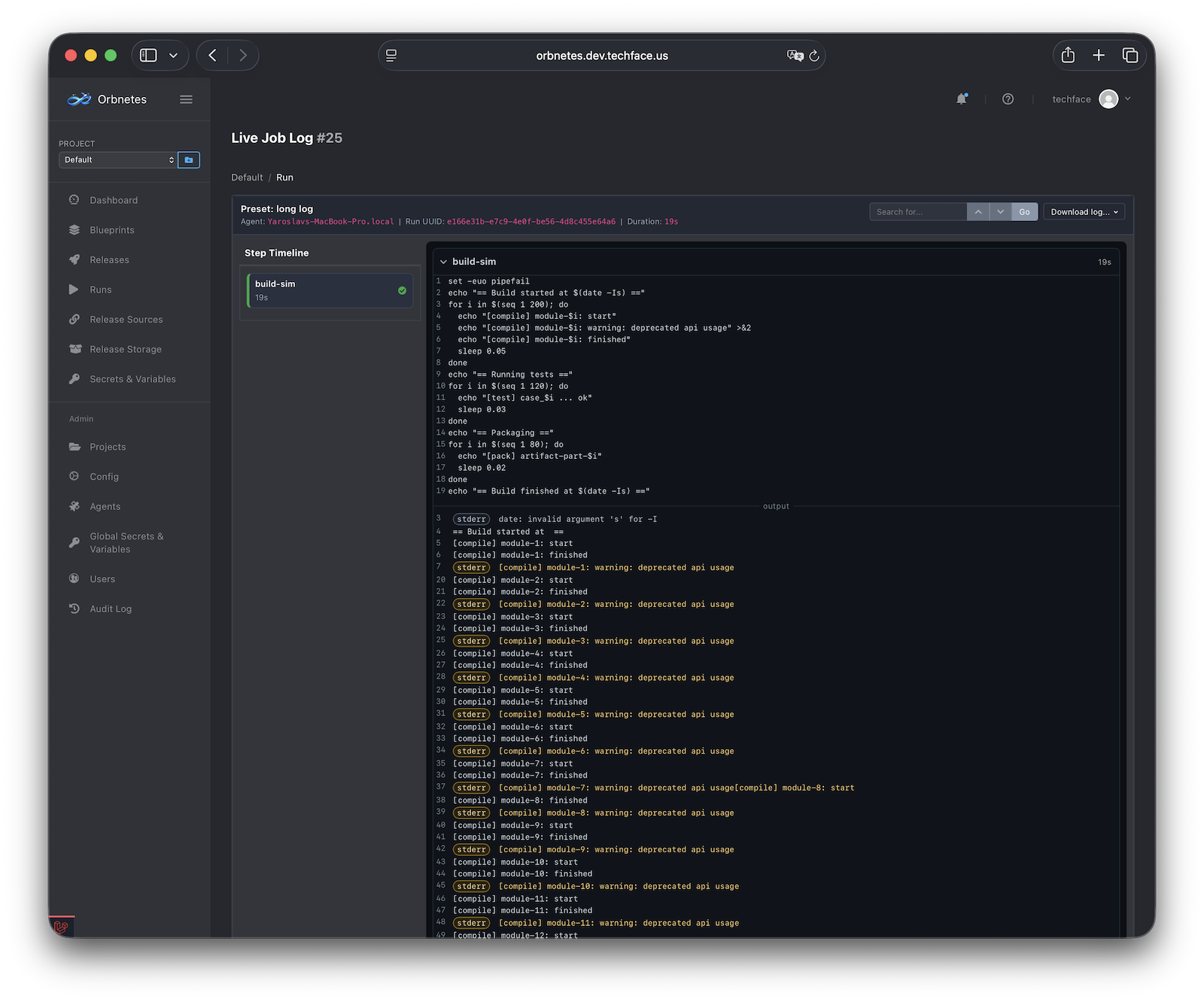
Live job pages are step-level execution diagnostics.
Typical capabilities:
- step timeline with statuses and durations,
- live streamed console logs,
- per-step expand/collapse,
- searchable output,
- line anchors for precise references,
- downloadable logs (job or pipeline scope depending on page/actions).
What operators use live page for:
- find first failing command quickly,
- distinguish infra errors vs script errors,
- copy exact error context for incident communication,
- confirm retries/reruns changed behavior.
Best practice:
- always start analysis from first failed step, not final summary line.
- correlate step output with environment/source/inputs shown in run context.