3.1 Control Plane vs Agent Execution Plane
3.2 Project Scope Model
3.3 Data Flow: Source -> Release -> Pipeline -> Logs/Artifacts
3.4 Runtime Configuration Layers (global / project / environment)
3.5 Pipeline Execution Semantics
3.6 Release Governance Path
3.7 Rollback Architecture (Policy-driven)
3.8 Security and Trust Boundaries
3.9 State and Persistence Model
3.10 Scalability Model
3.11 Failure Modes and Recovery Patterns
3.12 Why This Architecture Works in Practice
12.1 Release Creation Flow
Orbnetes deployment and release orchestration documentation for operators and platform teams.
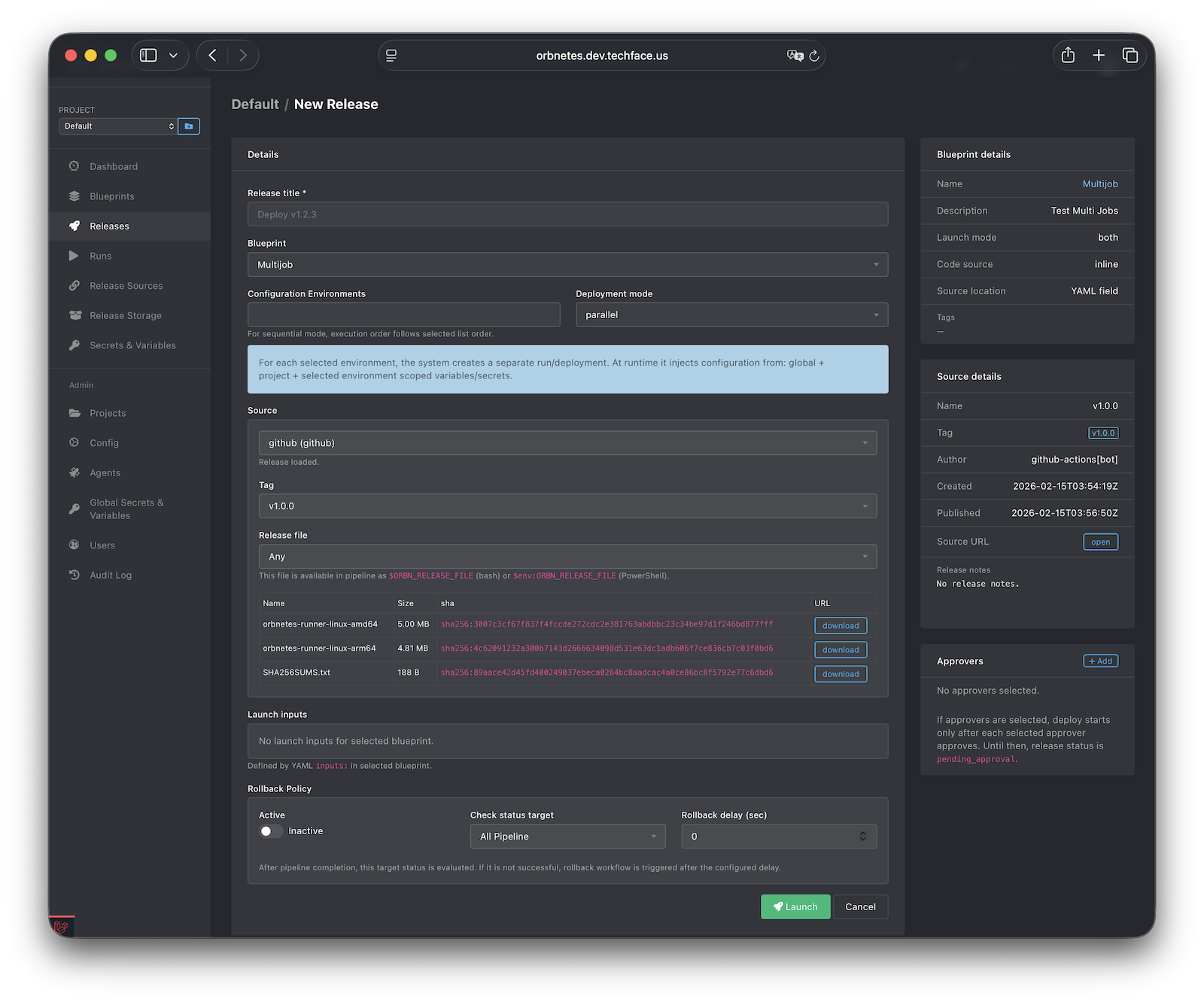
A Release in Orbnetes is the governed deployment intent that binds:
- a selected artifact version (source/tag/file),
- a blueprint execution plan,
- selected configuration environments,
- optional approvals,
- optional rollback policy.
Releases are the preferred path for controlled deployments because they preserve full traceability and operational context.
Typical release creation sequence:
- Set Release title
Human-readable identifier for operations and audit. - Select Blueprint
Defines execution logic (jobs/steps/needs/conditions). - Select Source context
Source -> Tag -> Release file (artifact to deploy). - Set Configuration Environments
Targets runtime config context and deployment expansion behavior. - Fill Launch Inputs
Blueprint-defined runtime parameters. - (Optional) Select Approvers
If approvers are set, release enters approval-gated state before deploy starts. - (Optional) Configure Rollback Policy
Defines automatic rollback behavior for failure scenarios. - Create/Launch Release
System creates release entity and either starts deployments immediately, or waits for approvals.
Why this flow is effective:
- artifact, execution, and governance are captured in one object,
- launch is repeatable and auditable,
- incident response has complete context from one release page.