3.1 Control Plane vs Agent Execution Plane
3.2 Project Scope Model
3.3 Data Flow: Source -> Release -> Pipeline -> Logs/Artifacts
3.4 Runtime Configuration Layers (global / project / environment)
3.5 Pipeline Execution Semantics
3.6 Release Governance Path
3.7 Rollback Architecture (Policy-driven)
3.8 Security and Trust Boundaries
3.9 State and Persistence Model
3.10 Scalability Model
3.11 Failure Modes and Recovery Patterns
3.12 Why This Architecture Works in Practice
2.4 Add Release Source / Storage
Orbnetes deployment and release orchestration documentation for operators and platform teams.
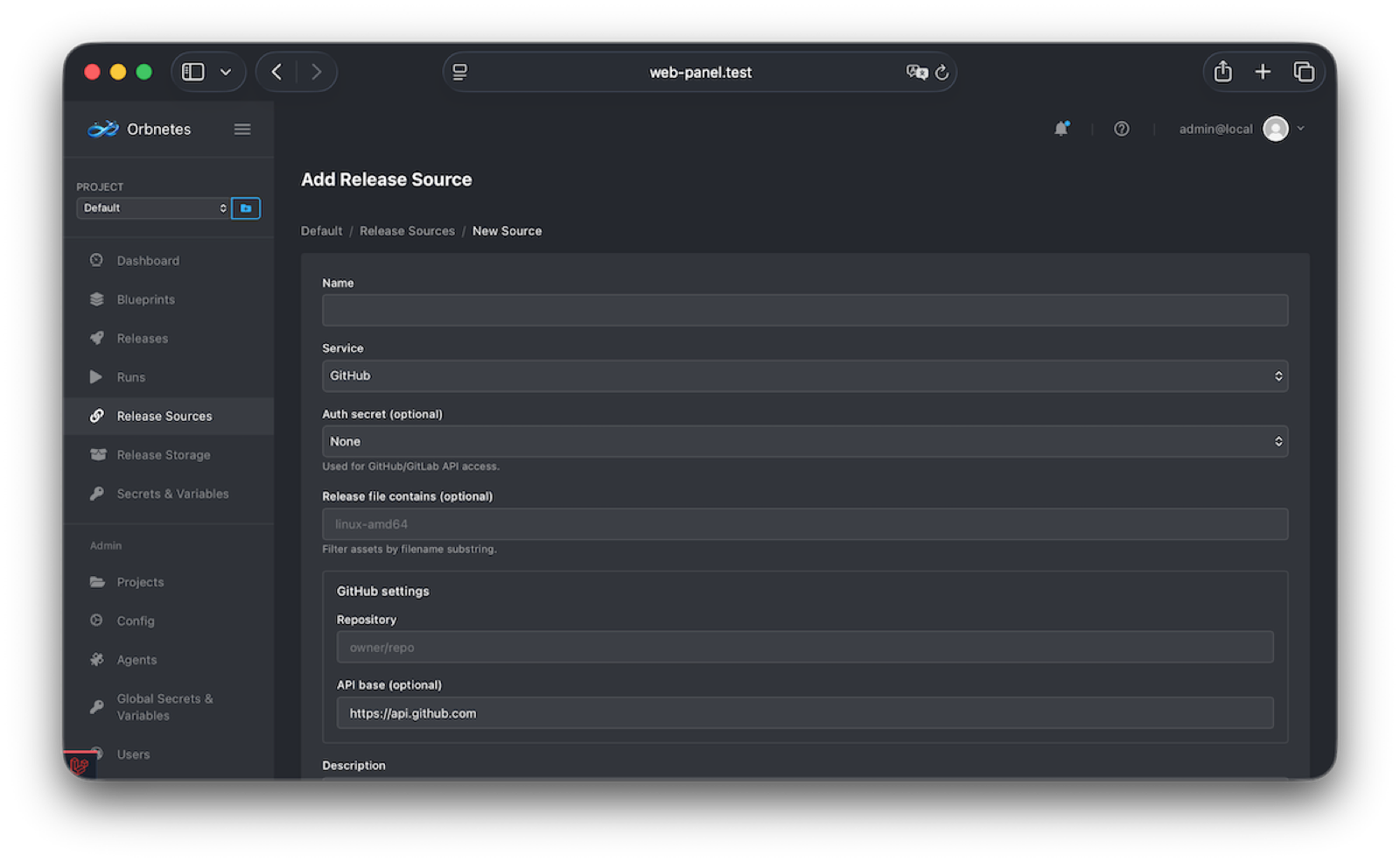
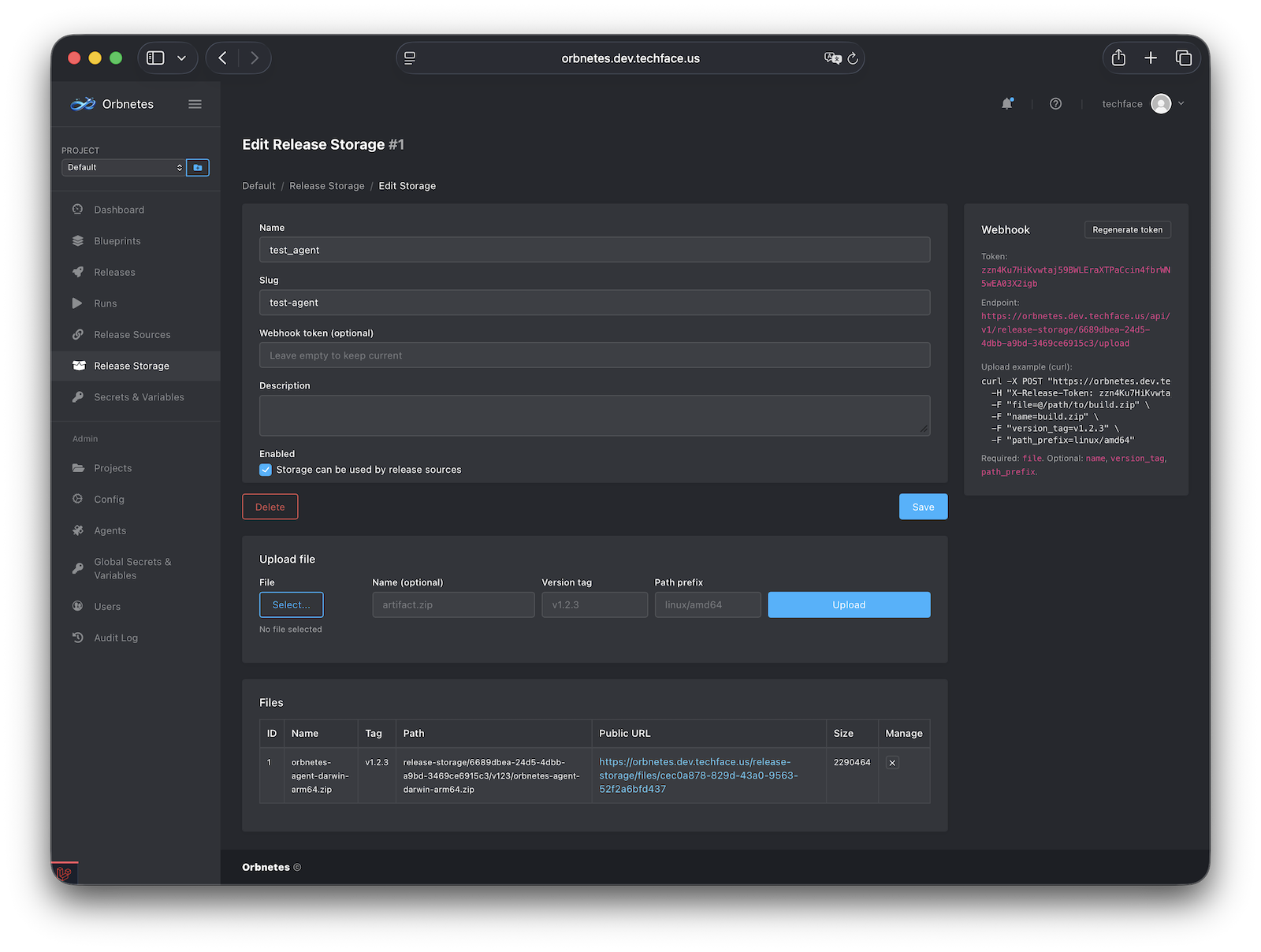
Release Sources define where deployment artifacts come from. Start with one source that is easy to verify.
Option A: GitHub/GitLab release source
- Create source entry with repo/service settings.
- Test tag loading from source.
- Confirm release metadata and asset list are returned.
Option B: Internal Release Storage
- Create storage.
- Upload a test artifact.
- Confirm downloadable URL and checksum visibility.
Why this matters:
- Orbnetes is optimized for build once, deploy many.
- Source selection at release time makes deployment deterministic.
Validation:
- Source tags are listed in Release create page.
- Selecting tag shows release files/assets.
- Chosen file is passed to runtime as
ORBN_RELEASE_FILE.