3.1 Control Plane vs Agent Execution Plane
3.2 Project Scope Model
3.3 Data Flow: Source -> Release -> Pipeline -> Logs/Artifacts
3.4 Runtime Configuration Layers (global / project / environment)
3.5 Pipeline Execution Semantics
3.6 Release Governance Path
3.7 Rollback Architecture (Policy-driven)
3.8 Security and Trust Boundaries
3.9 State and Persistence Model
3.10 Scalability Model
3.11 Failure Modes and Recovery Patterns
3.12 Why This Architecture Works in Practice
12.6 Release Detail Page Anatomy
Orbnetes deployment and release orchestration documentation for operators and platform teams.
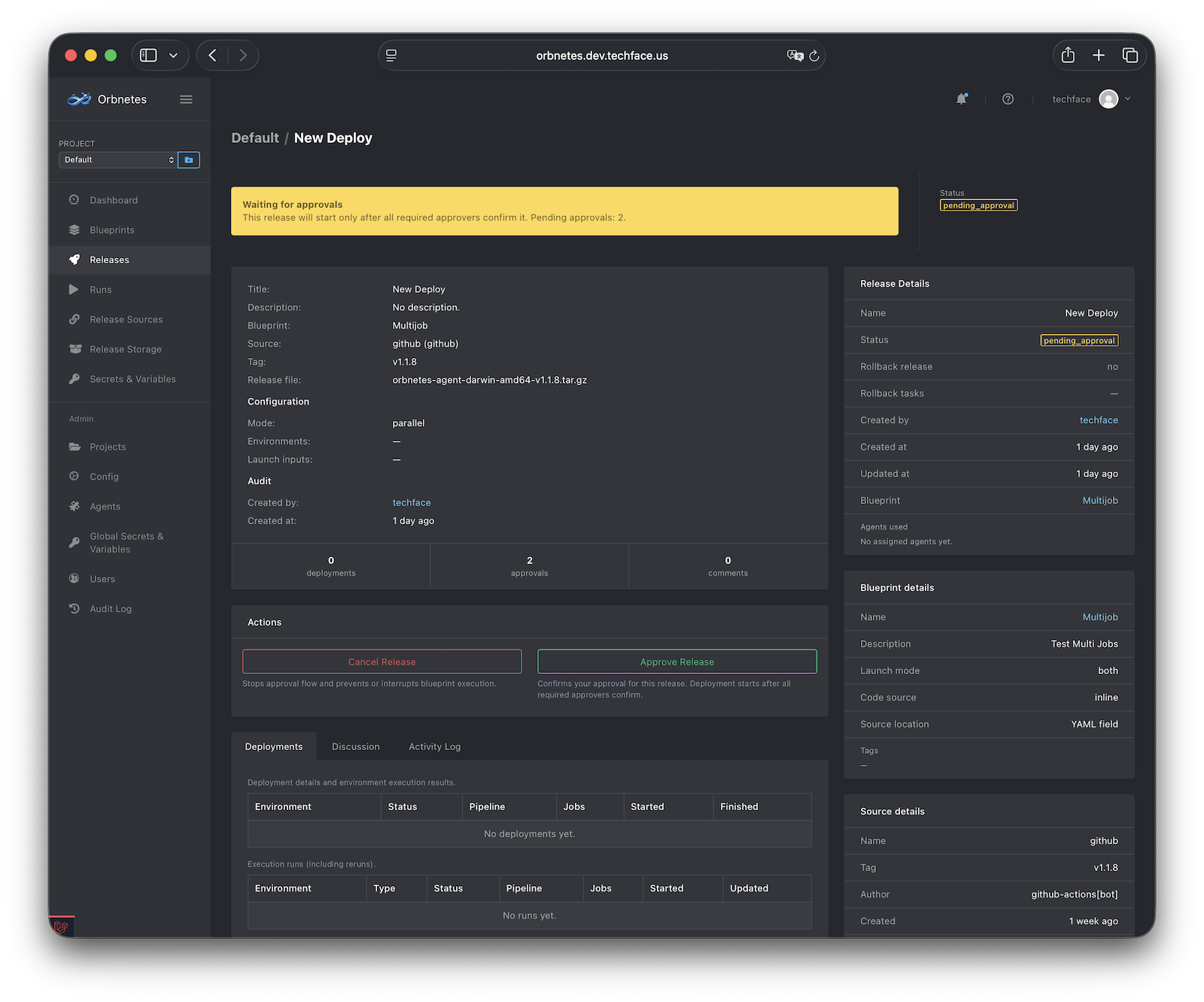
Release detail page is the operational source of truth for one release.
Typical sections:
Header / Context
- release title and project context,
- primary status,
- key timestamps.
Progress / Runtime State
- live or final progress view,
- currently active phase or completion summary,
- links to pipeline execution.
Actions
- cancel release (when valid),
- approve release (for required approvers),
- context-aware action availability by status/permissions.
Deployments tab
- per-environment deployment records,
- includes reruns/restarts where applicable.
Discussion tab
- release comments and operator collaboration trail.
Activity Log tab
- chronological operational events related to release (foundation for audit-like timeline view).
Release Details panel
- creator, source, selected tag/file, blueprint, timestamps, description, selected environments and launch context.
Blueprint Details panel
- linked blueprint identity and execution mode metadata.
Source Details panel
- source name/provider, selected tag/version metadata, source URL/release notes references where available.
Why page anatomy matters:
- combines governance + runtime + collaboration in one place,
- reduces context switching during incident handling,
- supports postmortem reconstruction from a single release object.
Release Readiness Checklist
Before creating a production release:
- Correct blueprint selected and validated.
- Correct source/tag/file selected.
- Environments and deployment mode match rollout plan.
- Required launch inputs are complete and reviewed.
- Approver list (if used) reflects actual release authority.
- Rollback policy is configured for high-risk deployments.
This checklist prevents the most common release-time mistakes.