3.1 Control Plane vs Agent Execution Plane
3.2 Project Scope Model
3.3 Data Flow: Source -> Release -> Pipeline -> Logs/Artifacts
3.4 Runtime Configuration Layers (global / project / environment)
3.5 Pipeline Execution Semantics
3.6 Release Governance Path
3.7 Rollback Architecture (Policy-driven)
3.8 Security and Trust Boundaries
3.9 State and Persistence Model
3.10 Scalability Model
3.11 Failure Modes and Recovery Patterns
3.12 Why This Architecture Works in Practice
13.4 Approve / Comment / Cancel
Orbnetes deployment and release orchestration documentation for operators and platform teams.
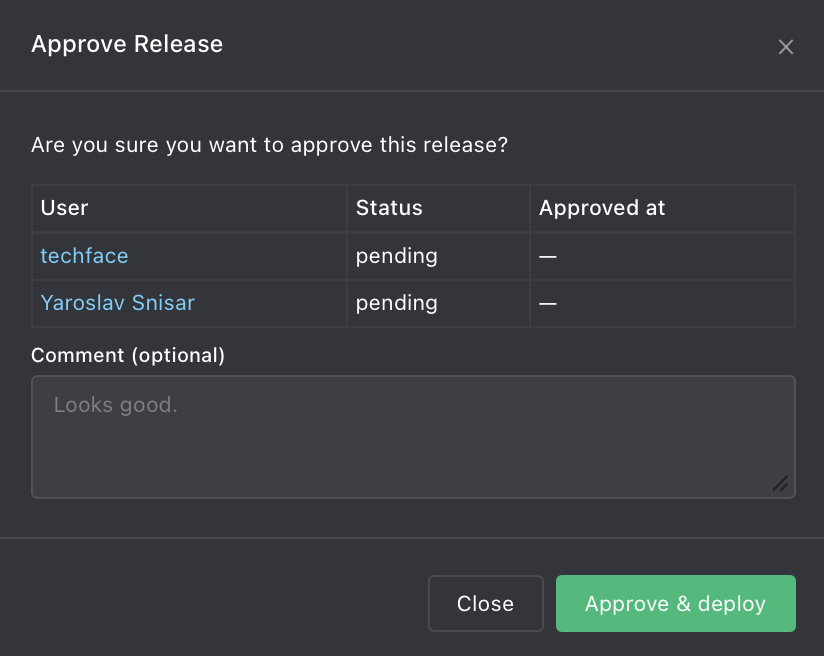
Approve
Used by eligible approver to authorize release progression.
- Approval action records actor and timestamp.
- Once required approvals are satisfied, release transitions to execution phase.
Comment
Used for review discussion, clarification, or release notes feedback.
- Comments create a lightweight collaboration trail.
- Useful for handoff context between developers and operations.
Cancel
Used to terminate release before or during execution (depending on current state).
- If pending approval: closes approval flow and release ends as canceled.
- If executing: requests termination of ongoing execution path.
Operational guidelines:
- Require comment for exceptional approvals/cancellations (team policy recommended).
- Use cancel for safety when release intent is invalid, not as generic retry mechanism.
- Use rerun/new release flow for corrected deployments rather than ambiguous cancel/reopen behavior.