3.1 Control Plane vs Agent Execution Plane
3.2 Project Scope Model
3.3 Data Flow: Source -> Release -> Pipeline -> Logs/Artifacts
3.4 Runtime Configuration Layers (global / project / environment)
3.5 Pipeline Execution Semantics
3.6 Release Governance Path
3.7 Rollback Architecture (Policy-driven)
3.8 Security and Trust Boundaries
3.9 State and Persistence Model
3.10 Scalability Model
3.11 Failure Modes and Recovery Patterns
3.12 Why This Architecture Works in Practice
13.1 Approval Model
Orbnetes deployment and release orchestration documentation for operators and platform teams.
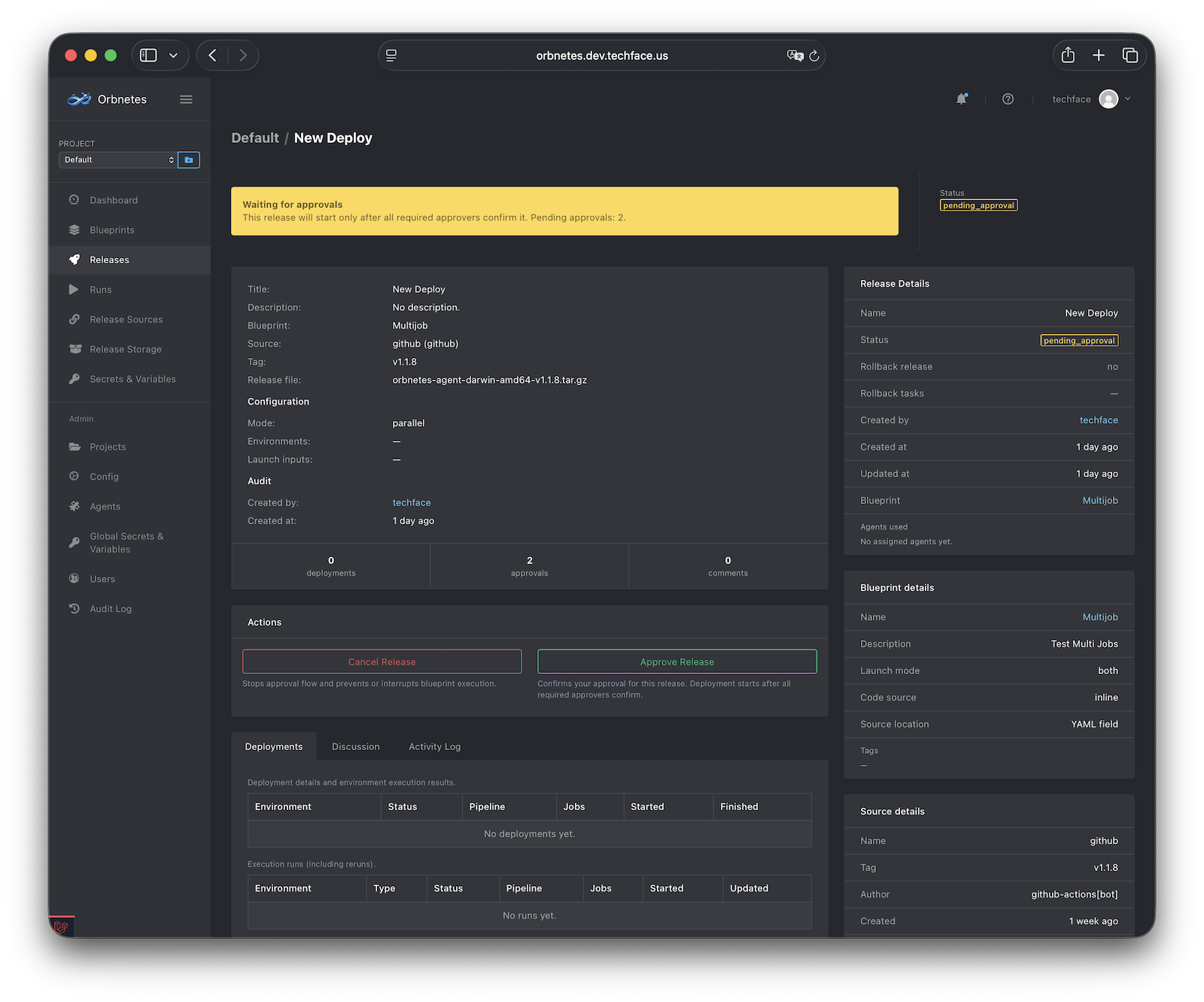
Approvals in Orbnetes provide a governance gate between release creation and deployment execution. They are used when a release requires explicit human authorization before jobs start.
Approval flow goals:
- prevent unreviewed production changes,
- make responsibility explicit,
- preserve auditability of who approved what and when.
The approval model is release-centric:
- Approvers are attached at release creation time.
- Release status enters
pending_approvalif approvers exist. - Deployment starts only after required approvals are completed.
Key properties:
- Approval state is tied to release record.
- Approval decisions are persisted and visible in release context.
- Approval is a governance action, not a pipeline step command.
Operational meaning:
- A release can exist in system but remain non-executing until governance condition is met.
- This separates prepared release from authorized deployment.